
In today’s digital world, having a professional website is important for businesses, freelancers, startups, and individuals. A website provides an online place where people can learn about a business, explore its services, view products, read useful information, and contact the company.
Website development is not only about creating a beautiful design. A successful website needs proper planning, useful content, responsive design, good performance, security, and regular maintenance. Whether you are creating a small business website, portfolio, blog, or online store, understanding the development process can help you build a better online presence.

What Is Website Development?
Website development is the process of creating, designing, testing, and maintaining a website. It includes planning the website structure, creating pages, adding content, designing the user interface, and making sure everything works correctly.
Websites can be simple or complex. A small business website might contain Home, About, Services, Blog, and Contact pages. An online store may require product pages, categories, shopping carts, checkout systems, payment options, customer accounts, and order management.
Website development can involve technologies such as HTML, CSS, JavaScript, PHP, databases, and content management systems. Platforms such as WordPress make website development easier because users can manage content and build websites without manually coding every part.
The front end of a website is what visitors see and interact with. It includes text, images, buttons, menus, colors, layouts, and animations. The back end manages functions such as databases, forms, accounts, settings, and other website features.
Why Does a Business Need a Website?
A website gives a business a professional online presence. Customers can visit the website at any time to find important information about the company.
A website can display:
- Business information
- Services
- Products
- Prices
- Contact details
- Location
- Opening hours
- Customer reviews
- Portfolio projects
- Blog posts
- Frequently asked questions
For example, a restaurant can use its website to display its menu, food images, location, opening hours, and ordering information.
A web development company can show its services and previous projects. A photographer can display a portfolio, while an online store can display products and allow customers to place orders.
A website can also help a business appear in search engine results when people search for relevant products or services.
Planning a Website Before Development
Planning is one of the most important steps in website development.
Before starting the design, decide what the website should achieve. Think about the target audience, the services offered, the information visitors need, and the actions you want visitors to take.
Important questions include:
- Who will visit the website?
- What does the business offer?
- Which pages are required?
- Does the website need a blog?
- Does it need a contact form?
- Does it need online payments?
- Does it need an online store?
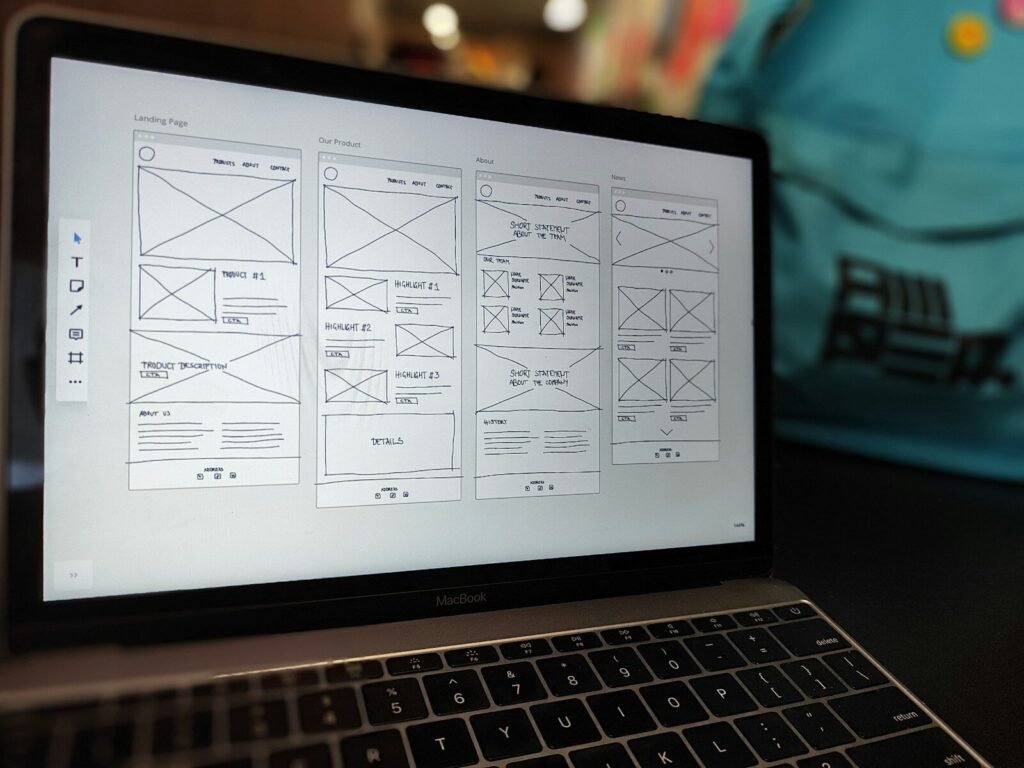
A basic business website might have this structure:
Home → About → Services → Portfolio → Blog → Contact
Planning the structure first makes development easier and reduces unnecessary changes later.
Choosing a Domain and Hosting
A domain name is the web address visitors use to open a website. A good domain should be easy to remember, easy to type, and related to the business.
Hosting provides the server space where the website files and data are stored.
When choosing hosting, consider:
- Performance
- Storage
- Security
- Backups
- Customer support
- SSL support
- Traffic limits
The domain is the address of the website, while hosting provides the space where the website exists.
Good hosting can contribute to website reliability and performance.
WordPress Website Development
WordPress is a popular content management system used to create many different types of websites.
It can be used for:
- Business websites
- Blogs
- Portfolios
- Restaurant websites
- Online stores
- Service websites
- News websites
WordPress allows users to create pages and posts, upload images, manage menus, and add features through plugins.
Plugins can provide additional functionality such as:
- SEO
- Contact forms
- Security
- Backups
- E-commerce
- Performance optimization
- Image optimization
- Analytics
Themes control much of the visual appearance of a website.
Designing a Website with Elementor
Elementor is a visual website builder that allows users to create pages using a drag-and-drop interface.
Users can add headings, text, images, buttons, icons, videos, containers, forms, and other elements.
Elementor can be useful for beginners because the design can be edited visually.
A professional design should focus on clarity. Using too many colors, fonts, animations, or effects can make a website difficult to understand.
The website should have a consistent design throughout its pages.
Creating a Professional Homepage
The homepage is usually the first page visitors see. It should immediately explain what the website or business is about.
A homepage can include several important sections.
Hero Section
The hero section appears near the top of the homepage. It can contain a main heading, short description, button, and image.
For example:
Build Your Online Presence With a Modern Website
A clear call-to-action button can encourage visitors to contact the business or learn more.
Services Section
The services section explains what the business provides. Each service can include a title, short description, icon, and button.
About Section
The About section introduces the business and explains its experience, purpose, or background.
Portfolio Section
A portfolio can display previous projects and help visitors understand the type of work provided.
Contact Section
The contact section gives visitors a way to communicate with the business through a form, email, phone number, or location information.
Responsive Website Design
People access websites using desktops, laptops, tablets, and smartphones.
Responsive design allows a website to adjust to different screen sizes.
A desktop layout may contain multiple columns, while the same content may appear in a single column on a smartphone.
When designing a website, check:
- Desktop view
- Tablet view
- Mobile view
Images should fit correctly, text should remain readable, buttons should be easy to use, and menus should work properly.
A website that looks good on a computer but is difficult to use on a phone can create a poor user experience.
Website Speed and Performance
Website speed is an important part of website development.
Large images, unnecessary plugins, complicated animations, poor hosting, and inefficient scripts can affect loading performance.
Some ways to improve website speed include:
Optimize Images
Resize and compress images before uploading them.
Use Caching
Caching can help websites deliver content more efficiently.
Reduce Unnecessary Plugins
Only install plugins that are actually needed.
Choose Good Hosting
Reliable hosting can help improve website performance.
Optimize Website Files
Reducing unnecessary scripts and styles can improve loading efficiency.
A faster website can provide a smoother experience for visitors.

Website Navigation
Navigation helps visitors move between different pages.
A simple navigation menu might include:
Home | About | Services | Portfolio | Blog | Contact
Important pages should be easy to find.
Complicated navigation can make visitors confused and may prevent them from finding important information.
On mobile devices, navigation menus often use a menu button that opens the available links.
Good navigation makes the website easier to understand and use.
Creating Useful Website Content
Good content is an important part of website development.
Content should provide useful information instead of simply filling space.
Website content can include:
- Website pages
- Blog posts
- Service descriptions
- Product descriptions
- Guides
- Tutorials
- Frequently asked questions
- Case studies
Content should be divided into headings and short paragraphs.
Using lists and clear sections makes long content easier to read.
Useful content can also help visitors understand the business and make informed decisions.
Website Images
Images can make a website more attractive and help explain information visually.
Images should be relevant to the website and its audience.
For example, a restaurant can use food photography, while a website development business can use images related to technology, coding, websites, and design.
Images should be optimized so that large file sizes do not unnecessarily slow down the website.
Appropriate alternative text can also be added to important images.

Search Engine Optimization
Search Engine Optimization, or SEO, helps search engines understand website content.
SEO includes different areas such as:
- Page titles
- Headings
- Website content
- Keywords
- Internal links
- Image alt text
- Website speed
- Mobile usability
- Technical structure
A business can create useful pages related to its services and answer common questions that potential customers may have.
SEO should focus on useful content rather than simply repeating keywords.
A blog can also provide additional useful information and attract visitors who are searching for topics related to the business.
Website Security
Website security should always be considered during development and maintenance.
Websites may contain login information, customer data, forms, orders, and other important information.
Basic security practices include:
- Use strong passwords
- Keep WordPress updated
- Keep plugins updated
- Keep themes updated
- Use trusted plugins
- Use SSL
- Create regular backups
- Monitor website activity
Regular backups are important because they can help restore a website if something goes wrong.
Website owners should also avoid installing unknown or unnecessary software.
Contact Forms and Customer Communication
A contact form provides visitors with an easy way to communicate with a business.
A basic contact form can include:
- Name
- Phone number
- Message
The form should be simple and easy to complete.
Businesses can also display their email address, phone number, location, and other contact options.
Clear communication options make it easier for potential customers to get in touch.
Website Development for Online Stores
Online stores require additional features compared with normal business websites.
An online store may include:
- Product pages
- Product categories
- Shopping cart
- Checkout
- Payment methods
- Shipping options
- Customer accounts
- Order management
WordPress websites can use WooCommerce to add e-commerce functionality.
Product pages should clearly display the product name, images, description, price, and purchasing options.
The checkout process should be simple and easy for customers to understand.

Testing a Website Before Launch
Before launching a website, every important part should be tested.
Check:
- Buttons
- Menus
- Forms
- Images
- Links
- Desktop layout
- Mobile layout
- Contact information
- Product information
- Checkout
It is also useful to check the website in different browsers.
Testing helps identify problems before visitors encounter them.
A website should be carefully reviewed before it is officially published.
Maintaining a Website After Launch
Website development does not end when the website goes live.
Regular maintenance may include:
- Updating WordPress
- Updating plugins
- Updating themes
- Creating backups
- Checking forms
- Checking links
- Optimizing images
- Monitoring performance
- Reviewing security
Business information should also be updated whenever necessary.
For example, phone numbers, addresses, services, prices, and opening hours may need to be changed over time.
Regular maintenance helps keep a website useful and functional.
Common Website Development Mistakes
Beginners can make several common mistakes when creating websites.
Too Much Information
Too much content in one section can make a website difficult to read.
Poor Mobile Design
Ignoring mobile users can make navigation difficult.
Large Images
Very large image files can slow down page loading.
Too Many Plugins
Unnecessary plugins can create performance and compatibility problems.
Complicated Navigation
Visitors should be able to find important pages easily.
No Clear Call to Action
Visitors should understand what action they can take next.
Ignoring Security
Websites should be updated, backed up, and maintained regularly.
Avoiding these mistakes can help create a cleaner and more user-friendly website.
The Future of Website Development
Website development continues to change as technology improves.
Modern websites increasingly use responsive layouts, automation, artificial intelligence tools, analytics, improved performance techniques, and interactive features.
Artificial intelligence can assist developers with tasks such as generating ideas, creating content drafts, analyzing information, creating design concepts, and assisting with coding.
However, technology does not remove the importance of good planning.
A website still needs a clear purpose, useful information, good structure, and an easy-to-use design.
Developers also need to continue learning because website technologies continue to change.
Building a Website Step by Step
A website development process can be summarized as follows:
Step 1: Define the purpose of the website.
Step 2: Identify the target audience.
Step 3: Choose a domain and hosting.
Step 4: Install and configure the website platform.
Step 5: Select a suitable theme.
Step 6: Create the main pages.
Step 7: Design the homepage.
Step 8: Add useful content and images.
Step 9: Make the website responsive.
Step 10: Improve website speed.
Step 11: Configure basic SEO.
Step 12: Add security and backups.
Step 13: Test the website.
Step 14: Publish the website.
Step 15: Maintain and improve the website.
Following these steps can make the development process more organized.
Conclusion
Website development is much more than creating an attractive webpage. A successful website needs proper planning, useful content, responsive design, good performance, security, SEO, and regular maintenance.
WordPress provides a practical platform for creating many types of websites, while tools such as Elementor make visual website design easier.
With practice and proper planning, it is possible to create websites for businesses, portfolios, blogs, restaurants, online stores, and many other purposes.
A successful website should always focus on the visitor. Information should be easy to find, navigation should be simple, pages should work properly, and the design should look good across different devices.
Whether you are creating your own website or developing websites for clients, learning the fundamentals of website development can provide a strong foundation for future projects.
The most important thing is to keep learning and practicing. Start with simple projects, understand how each part works, improve the design, test the website, and gradually move toward more advanced development.
A well-planned and properly maintained website can become an important part of a strong online presence and help a business communicate with its audience in a professional way.